
What Skills High Performers All Share
We’ve all read stories about people who appear to have a natural talent for something but fail to live up to expectations. If we are not one of those naturally gifted people, we are heartened to hear stories about people who overcome their lack of natural ability to become great at something. What often goes unseen is all the choices they have to make that involve sacrifices that we may not be willing to make to achieve greatness. However, while their sacrifices are not all the same, they share mental or psychological skills that set them apart.
While we may not want to or be able to make the same level of sacrifices, we can still adopt the mental skills they use to become high performers. Those skills are:
- Growth Mindset – Belief that you can continue to improve.
- Confidence – Self-assurance in one’s ability that leads to action without deliberate thought.
- Motivation – Develop intrinsic (internal) motivation.
- Resilience – The ability to bounce back from a loss, failure, mistake, injury, or setback. Embrace that failure and mistakes are necessary for learning and growth.
- Grit – Endures pain and adversity to enjoy and achieve outstanding results.
- Energy – Ability to stay controlled and composed in any situation and avoid being controlled by the fight or flight system.
- Focus – Choosing what to concentrate on in our minds.
- Decision Making – Making efficient, controlled, quick decisions that lead to the best possible outcomes.
Tapping into these skills gets you through training and the highs/lows on race day. Not to mention, race days rarely go to plan. Being mentally prepared ultimately determines your race and your enjoyment of racing. It’s the one thing you can control through your training block and on race day.
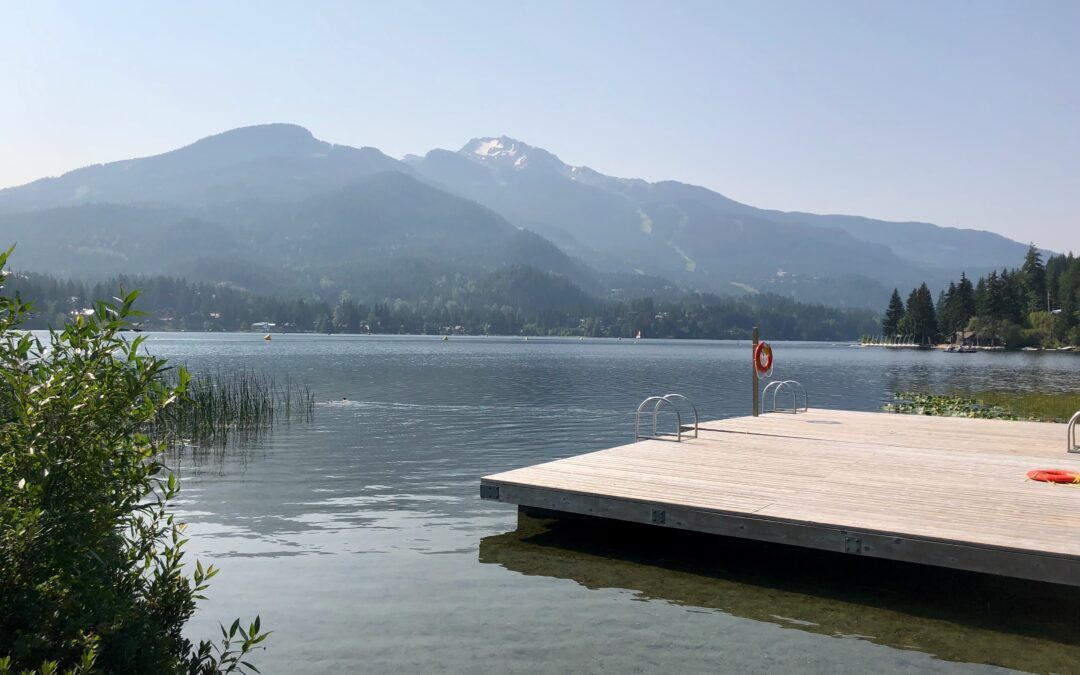
For example, when competing in the 2018 Ironman Canada in Whistler, I suffered a few setbacks leading up to race day. Subsequently, I performed at my worst in a full Ironman distance. I had a nasty cold three weeks before the race, followed by my first case of Shingles a week later. The shingles virus attacked the area on my face that had been split open in a bike crash the year before. I have a scar that runs from my upper lip, around the side of my nose, and up through my forehead on the left side of my face. Because the rash developed around my eye, I needed to see an ophthalmologist to ensure it hadn’t affected my cornea. That wasn’t the only twist. Because I was flying to Vancouver, I needed to see a doctor just before leaving to be cleared to fly. Despite suffering a few sleepless nights and feeling run down, I made the trip to Whistler. While the weather was within the seasonable temperature range when we arrived, it was in the mid-nineties on race day. Suffice it to say the weather and the fatigue caused by shingles made for a brutal race.
As the sun got higher in the sky and the temperature rose during the bike leg, I wondered if this would be my first DNF. When I reached transition two, my eyes were on fire from the salty sweat streaming down from under my helmet, and my legs locked up as soon as I put my feet on the ground. I had to wait a few seconds before swinging my leg over the seat to hand off my bike. As I hobbled off to the transition tent, I wondered how I would make it through a marathon. But after coming all this way and what I went through the last couple of weeks, I couldn’t quit now.
I ran/walked to the first aid station and started taking in coke and Gatorade. At this point, we also entered the tree-covered trail we were to run on. Not only were we out of the sun, a stream ran next to the trail, and you could feel coldness radiating off the fast-moving water. The combination of the coke and being out of the sun enabled me to run/walk through to mile 20 before hitting a wall where I wasn’t sure I would finish. Mile 20 was a section of trail flanked by a lake and the highway just before the last turnaround to finish the race. As I was resigned to walking the last six miles, a guy headed the other direction looked at me, pointed to his head, and said, “It’s all up here, it’s all up here! You got this man!” I smiled, knowing he was right, and started to run again. I was utterly wrecked at this point, so my run didn’t last long. But I shortened my time walking and resumed a run-walk to the end of the race. Those words of wisdom enabled me to get my focus back and finish the race stronger than I believed I was able to just a moment before.
Although it was my worst marathon finish, I had overcome illness, the weather, and my brain’s desire to quit to complete my third Ironman. Four weeks later, I competed in Ironman Maine 70.3 in Old Orchard Beach and had a personal best at that distance. That day, I PR’d each leg of a 70.3 despite not fully recovering from my full Ironman.
Due to circumstances beyond my control, I had to alter my race goals to finish the Canada race. I controlled my emotions by adjusting my expectations and then proceeded to exceed those expectations. Being sick before the race could have sapped my motivation to race, and my experience in Canada could have prevented me from racing in Maine.
The one mental skill I lacked in both races was confidence. I was worried about finishing both races. In Canada, I questioned my ability to finish the race after completing the bike. The short recovery period before Maine, compounded by my experience in Canada, would make for a tough race. But my decision to go with the flow made for a great race. The lower expectations made me more relaxed, which is likely why I had a PR.
Perseverance or Grit has always been a skill I naturally possessed. It has helped me develop the other mental skills required to train for and compete in endurance races. You likely have one or more of these skills that helped you get started in endurance sports. Improving the ones you already have and developing more will enhance your training, race day performance, and experience.
What’s stopping you from training your mental skills?